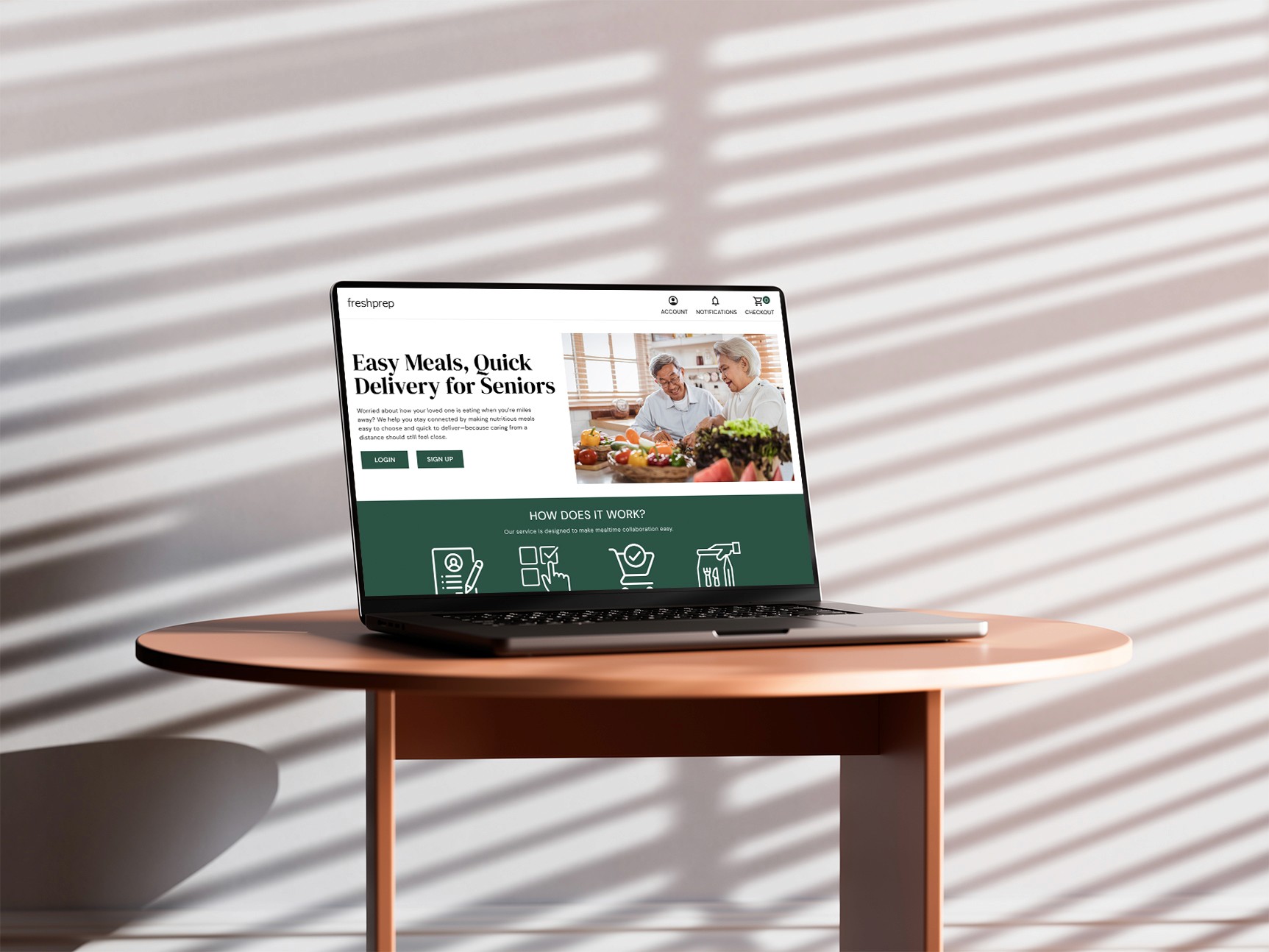
Fresh Prep is Western Canada's top-rated meal delivery service, offering the flexibility of both healthy meal kits and ready-to-eat meals to our communities through their first-party couriers.
The Fresh Prep Group Ordering Portal is a proposal building on their sustainable programs by providing seniors and their long-distance caregivers an easy way to order, track, and manage meals that meet proper dietary needs.
Year
2024
Role
Lead User Researcher, UX/UI Design, Design System
Team
Natalie, Van, Lauren, Sylvia
Context
Looking into how meal kits and delivered meals can benefit seniors
Initially I researched how the access of delivered meals can improve the overall health of seniors in several ways.
Studies have shown that home delivered meals can help reduce the potential for falls among the elderly, decrease isolation for those living alone, and relieve their feelings of aging in place (Thomas and Dosa, 2016).
From this, I was able to connect and go through popular meal kit services and dive deeper into whether they address the senior market.
Why Fresh Prep?
In the last few years, Fresh Prep has slowly started expanding their business to include programs which address food insecurity, carbon emissions, and food waste. They have the resources and quality control through their direct couriers to address senior specific needs — providing a level of trust and reassurance that their competitors lack.
[Empowering] Canadians to eat well and live better by delivering fresh, nutritious, and easy-to-prepare meals directly to their doors.
CEO of Fresh Prep, Becky Bauer (2024)
Problem
How might we allow seniors independence on meal choices that provides their nutritional and dietary needs, while keeping long distance caregivers informed and part of the decision-making process to ensure their senior’s health?

“It is very hard to have a loved one at a distance who needs care. You worry because they may not eat, or have anyone to look out for them in an emergency”.
NAC & the MetLife Mature Market Institute [MMMI], (2004)

The [seniors] emphasised — ‘I want to have a say in the matter too’ — and the importance of being able to eat the food they wanted whenever they wanted.
Hestevik et al. (2020)
By addressing these needs and challenges, customer value emerges.
Support caregivers through easily organizing personalized meals that reassures their loved ones needs are met without extraneous effort to offload caregiver burden.
Support senior independence by choosing meals they want to eat while still ensuring they meet their nutritional and dietary needs.
The business will also prosper as it will:
Increase its customer base by targeting a new significant and growing demographic of seniors and their caregivers.
Problem
A family account with a streamlined ordering portal, designed to allow seniors to select meals for the week based on their dietary needs, while keeping caregivers informed about their nutrition
Long distance caregivers may struggle getting timely updates and information on their senior. Moreover, the distance can make them feel excluded from the decision-making process concerning their senior. Here's a glimpse of how we addressed these barriers:
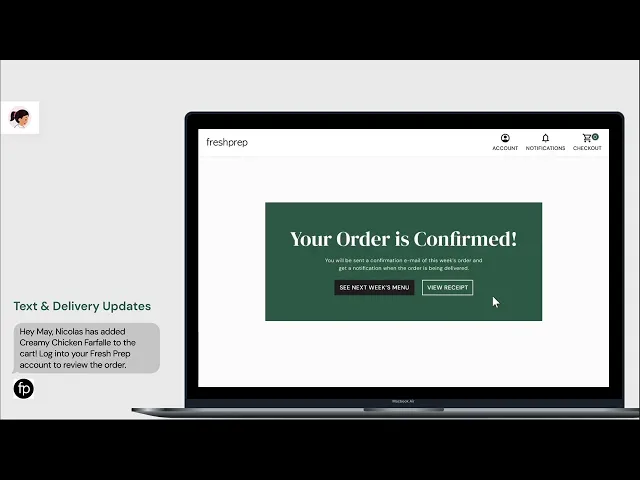
When caregivers sign up for the first time, they can add the senior’s dietary needs and health goal to the senior’s profile. Only meals that fit those needs appear on the ordering screen, making it easy for the senior to stick to dietary requirements.
Once seniors have added meals, caregivers receive a text notification to review and finalize the order. This collaborative process ensures the senior’s preferences are met, while keeping caregivers informed. Caregivers are also able to track where the delivery is online or stay informed through text notifications.
Seniors with limited mobility have difficulties doing daily tasks such as cooking due to conditions like arthritis. As health conditions are more likely to increase with age, it becomes harder to ensure healthy habits such as proper nutrition while also maintaining self-autonomy. We implemented the next set of interactions with seniors in mind with the intention to alleviate such challenges:
The login process for seniors is simplified by using their phone number, linked to their account, and a one-time code, eliminating the hassle of memorizing passwords.
During testing, 3 out of 5 seniors needed some guidance and a walkthrough to complete the process of ordering meals. Step-by-step prompts and clear buttons help seniors understand the key actions they need to take to add a meal.
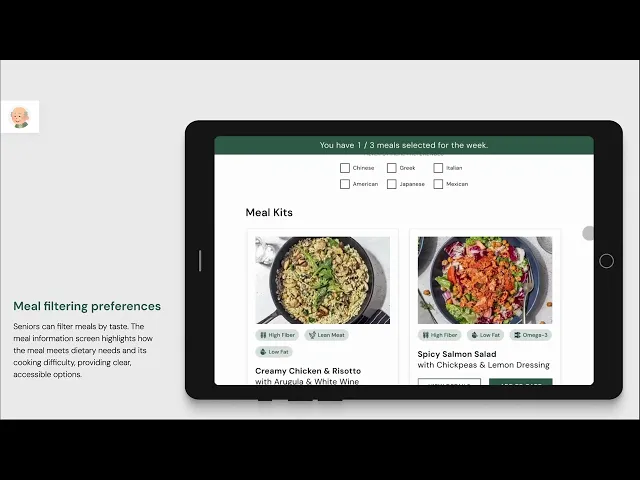
Seniors value their independence and want to choose meals that suit their preferences. They can filter options by taste and view detailed meal information. Compared to the caregiver screen, the seniors meal information screen is simplified to give them a basic understanding of how this meal matches their dietary needs and the difficulty level of the cooking process.
Touchpoints
To maintain engagement and retention, we’ve designed follow-up interactions that provide value and encourage ongoing use
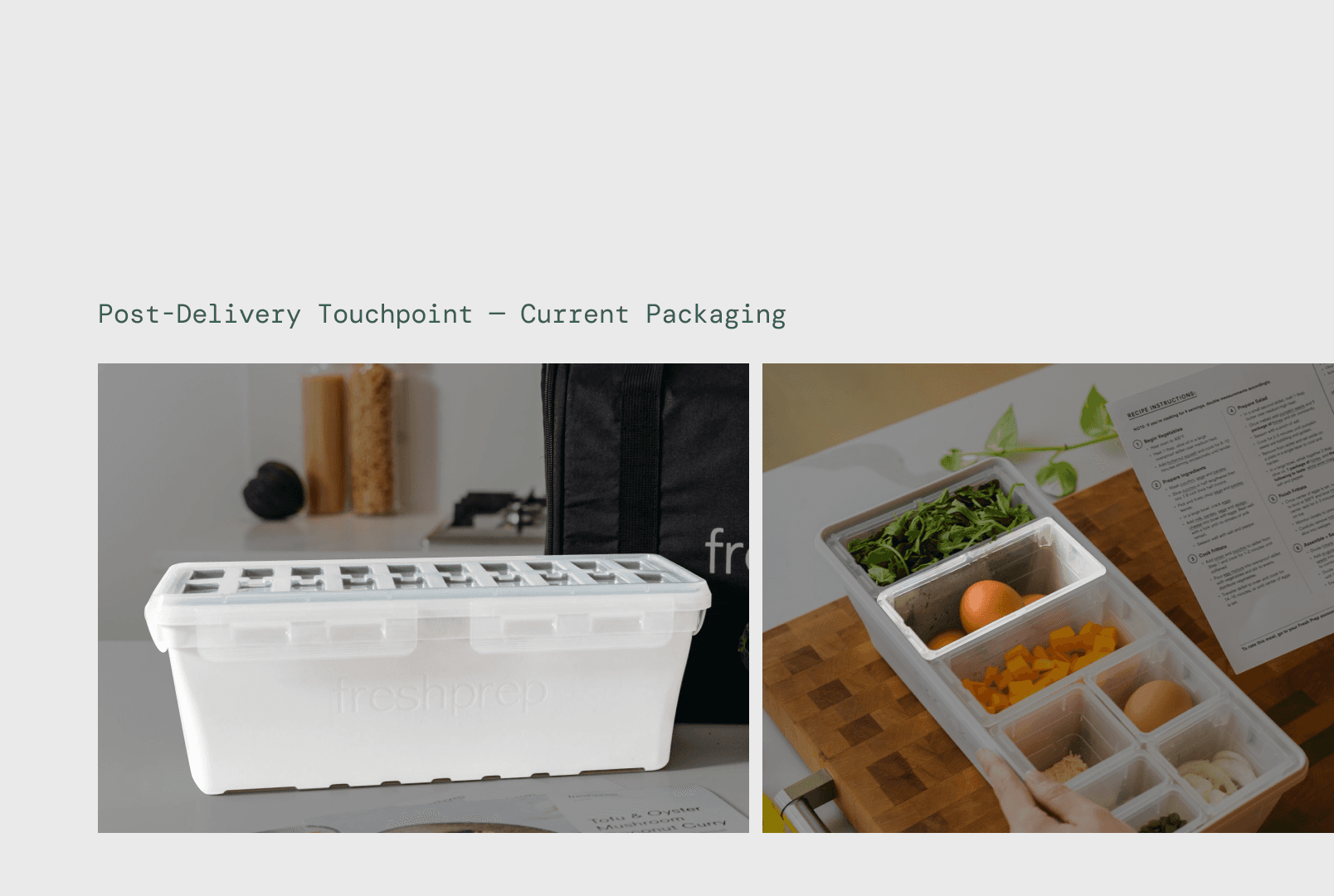
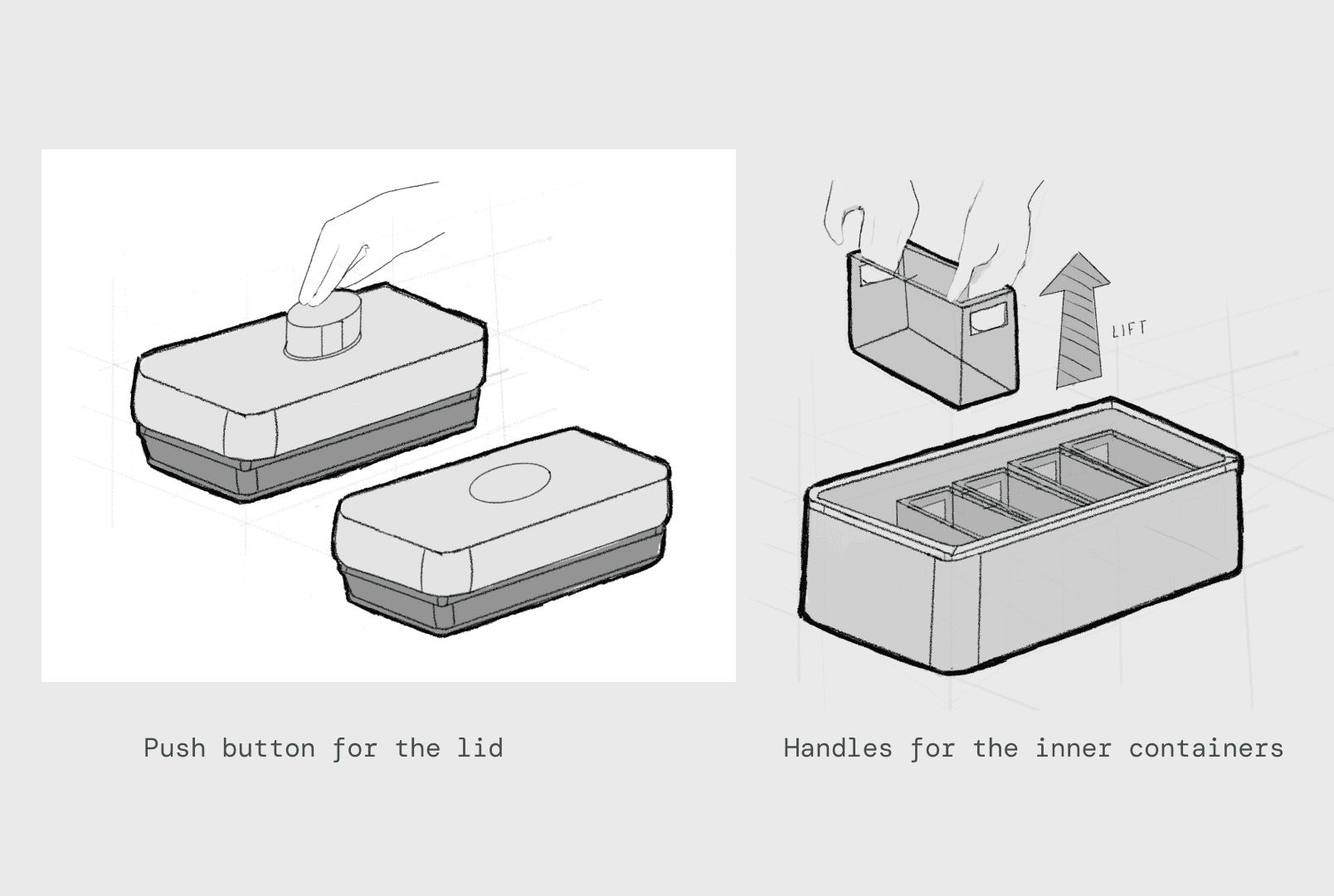
Recognizing the challenges some seniors face with motor function, the meal kit packaging is designed for effortless opening and closing. A push button with side grips simplifies the interaction—pressing the button unseals the lid, which pops out to indicate it’s ready to pull. The same button locks the lid back in place. Smaller containers within the kit include grips to make them easier to lift and handle.
Recipe and Summary Cards
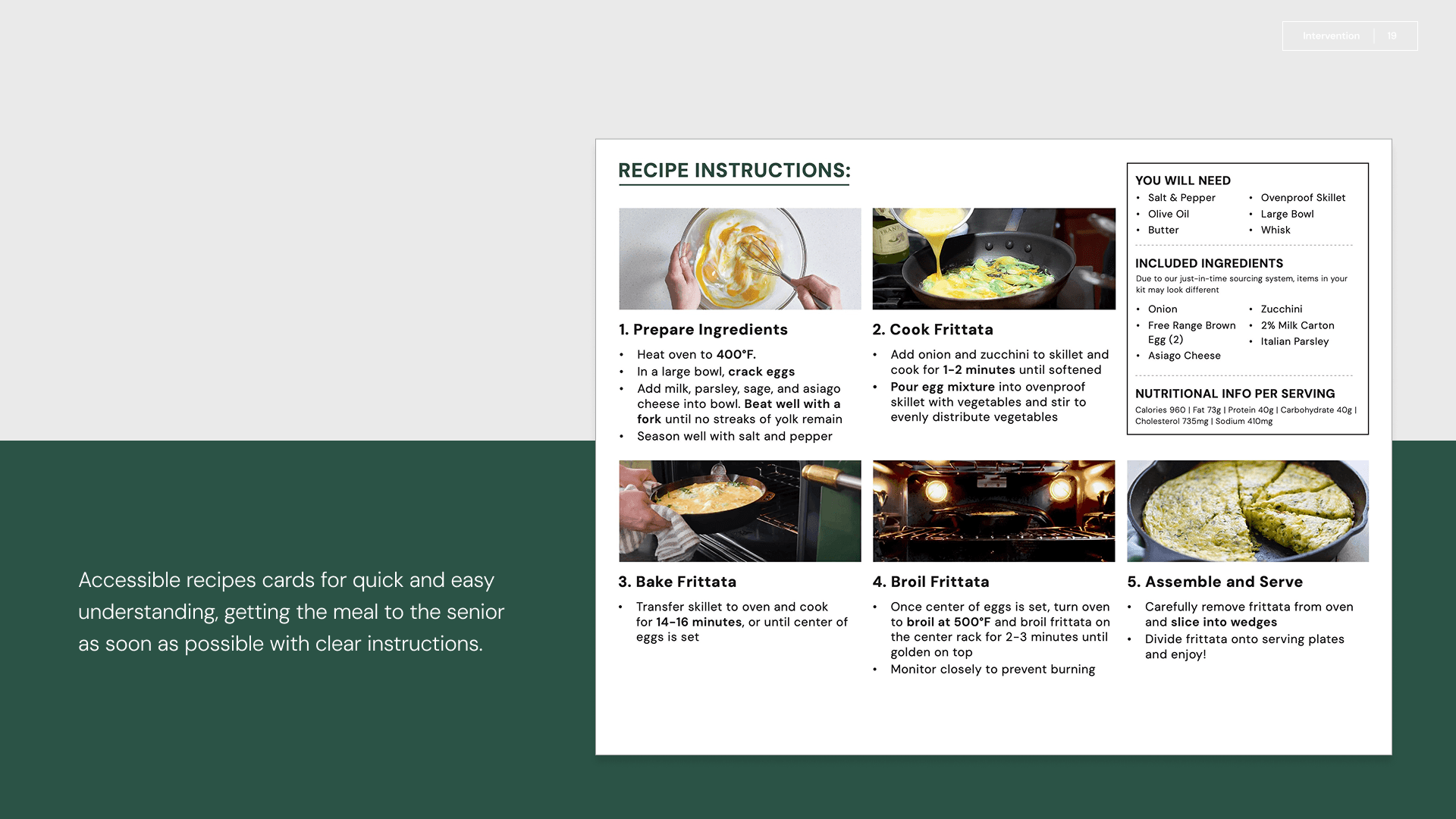
To further support accessibility, the recipe cards feature larger text and increased line spacing for easier reading. As well, they’ll receive an easy-to-understand nutrition summary card which highlights what the meals did well with, areas for improvement, and recommends meals for the next week, explaining how they align with their nutrition goals.
Design System
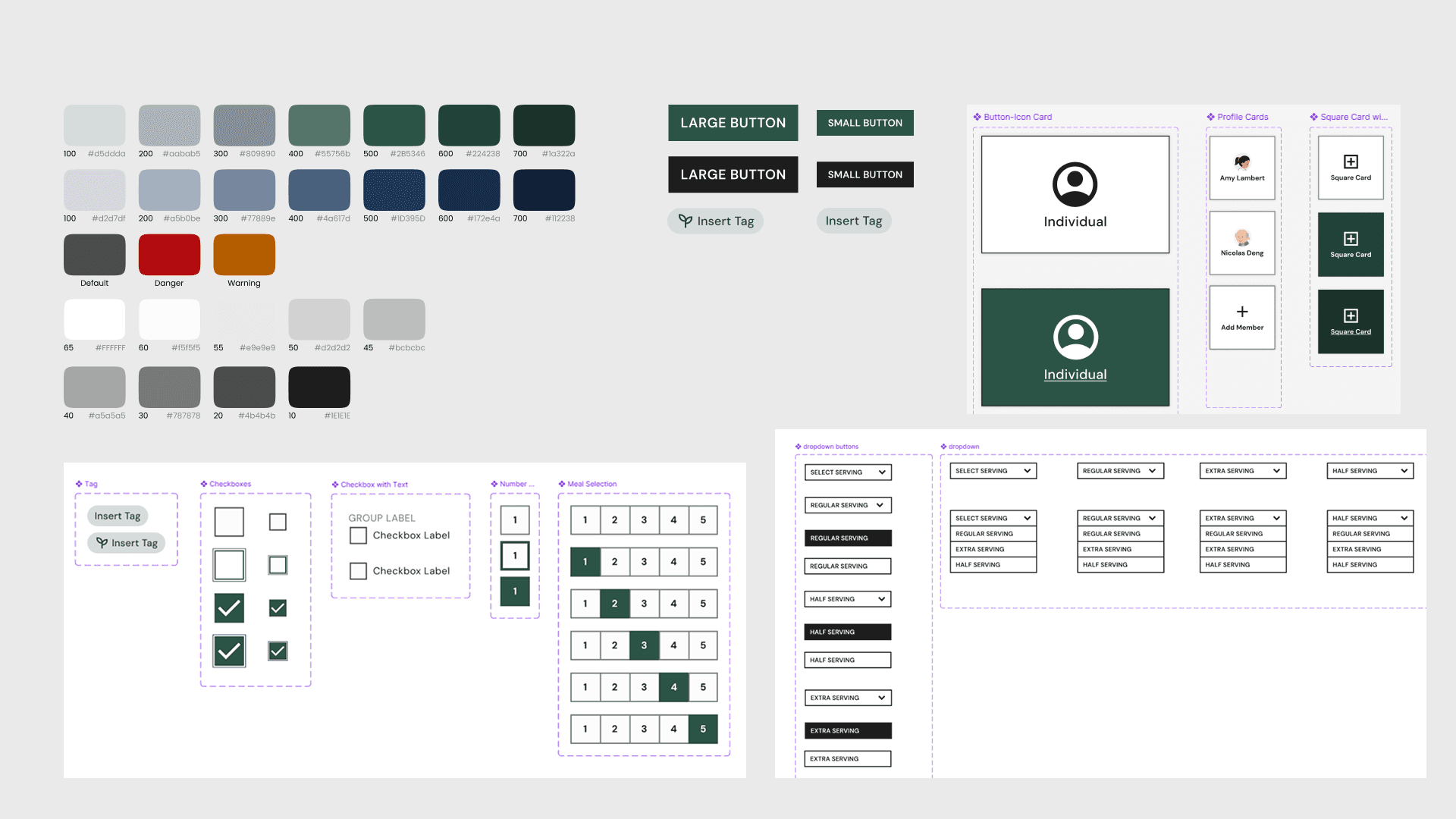
In order to keep our visual language consistent and reflective of Fresh Prep's current branding, we created a component library which was updated throughout our various iterations
To ensure our solution is accessible and user-friendly for seniors, we created a design system that aligned with Web Content Accessibility Guidelines (WCAG). We followed recommendations from the Bureau of Internet Accessibility to enhance the readability of the portal. Colour contrast was also tested thoroughly to meet the minimum contrast requirements, ensuring all text and visuals are easy to distinguish against their background.
Takeways
Design for humans
Explore spaces where a need isn’t being fulfilled or could be improved on by focusing on the human experience rather than the service being provided.
Trust the process
It is normal to hit a wall and run out of ideas. It is important to go back to your research and trust in your design decisions that led you to critically understand the space you’re in.